
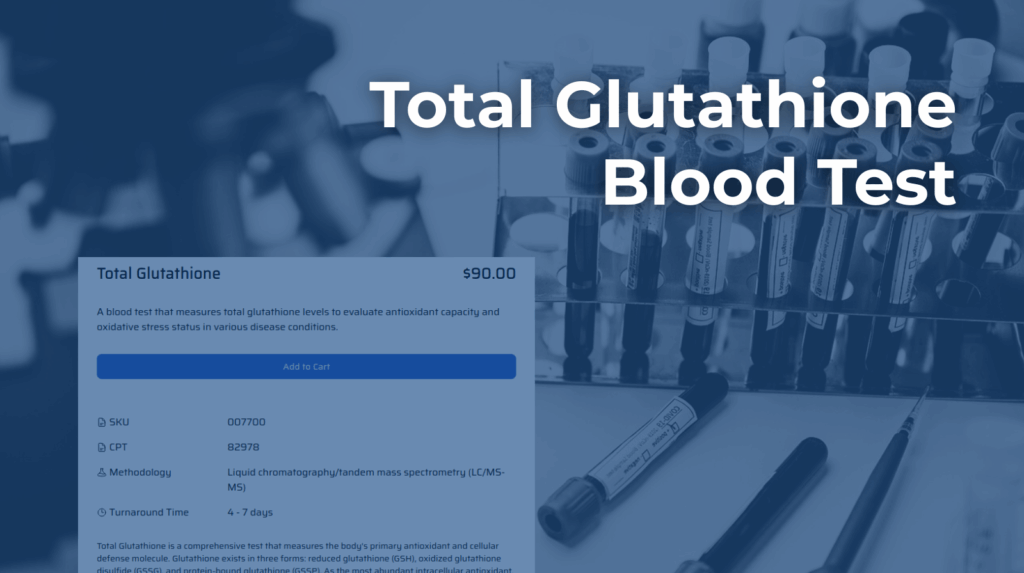
The total glutathione blood test is a valuable diagnostic tool that measures the total amount of glutathione in its two primary forms within a blood sample: reduced glutathione (GSH), which is the active and protective form, and oxidized glutathione (GSSG), which is produced when GSH neutralizes oxidative stress. Essentially, the total glutathione can be calculated as the sum of these two forms: Total glutathione = GSH + GSSG. Most clinical laboratories conduct this test using whole blood or red blood cells, as approximately 90-95% of glutathione in the blood is found within red blood cells rather than in plasma. This test provides a snapshot of the body’s glutathione pool, particularly its intracellular antioxidant reserves.
Interpreting the results of a total glutathione test can yield several insights into an individual’s health. Firstly, it serves as a rough indicator of the body’s overall antioxidant capacity, reflecting its ability to neutralize oxidative stress, protect mitochondria, support detoxification processes, and maintain redox balance within cells. Low levels of total glutathione are often associated with chronic inflammation, metabolic dysfunction, toxic burden, aging-related oxidative stress, and poor mitochondrial health. Secondly, the test can indicate the body’s ability to synthesize and maintain glutathione levels, as low levels may suggest insufficient precursor availability, high oxidative demand, or impaired synthesis due to mitochondrial stress or insulin resistance. Lastly, tracking total glutathione over time can help assess the effectiveness of lifestyle or nutritional interventions aimed at improving metabolic health, reducing inflammation, or enhancing dietary intake.
However, it is crucial to understand what the total glutathione test does not reveal. For instance, it does not provide information about the redox balance, as it combines both GSH and GSSG, making it impossible to determine how much glutathione is active versus how much has been depleted. Two individuals may have the same total glutathione levels, yet one may have a healthy redox state while the other is experiencing high oxidative stress. Additionally, the test does not measure tissue-level glutathione, meaning that normal blood glutathione levels do not necessarily reflect glutathione levels in critical organs such as the brain, liver, or mitochondria. Furthermore, the test does not identify the root causes of low glutathione levels, which could stem from various factors including oxidative stress, poor mitochondrial function, or inadequate amino acid intake. Lastly, total glutathione does not capture the efficiency of glutathione recycling, which is essential for maintaining optimal antioxidant function.
Clinicians often misinterpret total glutathione results, mistakenly equating “normal” levels with optimal health, overlooking the dynamic nature of glutathione status, and assuming that supplementation alone will resolve underlying issues. To gain a more comprehensive understanding of an individual’s glutathione status, it is beneficial to pair the total glutathione test with additional assessments, such as the GSH:GSSG ratio, markers of oxidative stress, metabolic health indicators, and inflammatory markers.
In summary, while total glutathione provides insights into the body’s antioxidant capacity, it is essential to recognize its limitations. It serves as a foundational marker of health, particularly in relation to metabolic and mitochondrial function, but should be interpreted in conjunction with other tests and clinical context. Ultimately, glutathione status is a reflection of metabolic health, as its production, usage, and recycling are energy-dependent processes. If mitochondrial function is compromised, the glutathione system will also be affected, regardless of the intake of external antioxidants. To sustainably improve glutathione levels, it is crucial to focus on enhancing metabolic health, ensuring adequate amino acid availability, reducing oxidative load, and protecting mitochondrial function.
There is a common misconception about how glutathione is produced and replenished in the body. It is essential to understand that glutathione is not stored in bulk or absorbed directly from the bloodstream; rather, it is synthesized within cells on demand from amino acid precursors. The two key amino acids that serve as the building blocks for glutathione are glycine and cysteine. Their availability is critical for maintaining optimal glutathione levels, making them the true levers for replenishing this vital molecule.
The structure of glutathione is that of a tripeptide, composed of three amino acids: glutamate, cysteine, and glycine. While glutamate is plentiful in most cells, cysteine and glycine are less abundant and often become the bottlenecks in glutathione synthesis. Cysteine, in particular, is a rate-limiting factor due to its unique properties. It contains a sulfur group that is essential for glutathione’s antioxidant capabilities, allowing it to neutralize reactive oxygen species and participate in detoxification processes. Without sufficient cysteine, the synthesis of glutathione slows or halts, leading to an accumulation of oxidative stress in the body.
Cysteine deficiency can occur for several reasons, including its susceptibility to oxidation, increased demand during inflammation or exposure to toxins, and metabolic changes associated with aging and insulin resistance. Cells tightly regulate cysteine levels because free cysteine can act as a pro-oxidant, meaning that a continuous supply is necessary for effective glutathione synthesis. On the other hand, glycine, often considered non-essential, becomes conditionally essential during times of stress or as we age. It plays a crucial role in the final step of glutathione synthesis, stabilizes the glutathione molecule, and supports various cellular functions.
The synthesis of glutathione occurs in two main steps within the cytosol of cells. The first step involves the combination of glutamate and cysteine to form γ-glutamylcysteine, which is catalyzed by the enzyme glutamate-cysteine ligase. This is the rate-limiting step and requires ATP. The second step combines γ-glutamylcysteine with glycine to produce glutathione, facilitated by the enzyme glutathione synthetase, which also requires ATP. If either cysteine or glycine is lacking, the synthesis of glutathione cannot proceed, highlighting the importance of both amino acids in this process.
Clinical insights reveal that supplying both glycine and cysteine together is more effective than providing either amino acid alone. While cysteine can temporarily elevate glutathione levels, it may also increase oxidative stress if not balanced with glycine. Conversely, glycine alone cannot enhance glutathione levels without the presence of cysteine. Together, these amino acids enable complete and balanced synthesis of glutathione, preventing the accumulation of unstable intermediates and efficiently restoring intracellular glutathione levels.
Mitochondria, the energy-producing organelles in cells, are particularly reliant on glutathione for protection against reactive oxygen species (ROS). They cannot synthesize glutathione themselves and depend on cytosolic production and transport. When both glycine and cysteine are adequately supplied, mitochondrial glutathione pools are replenished, leading to improved efficiency of the electron transport chain, reduced ROS leakage, and a slowdown in cellular aging.