
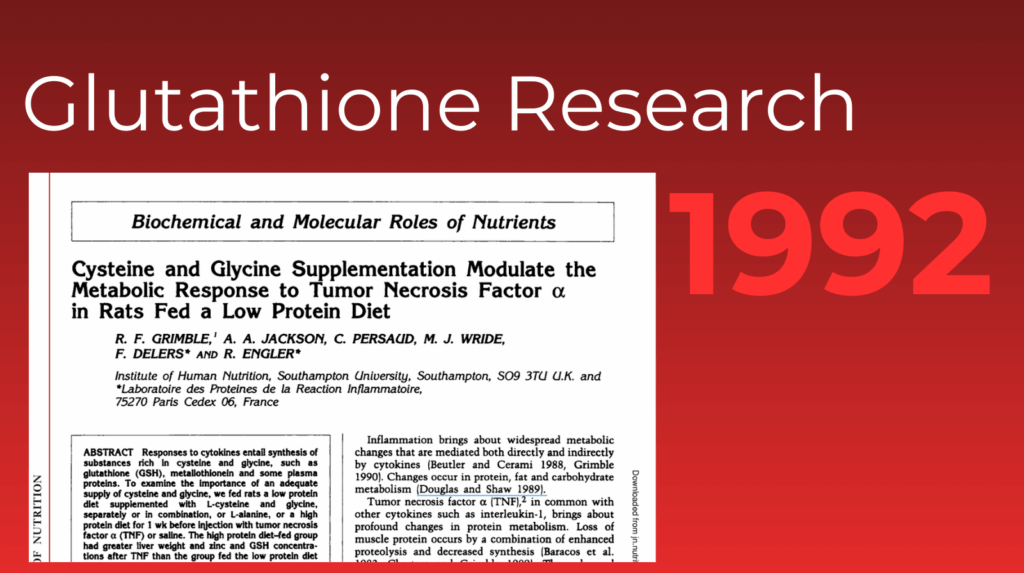
In a groundbreaking 1992 study conducted by researchers from the Institute of Human Nutrition at Southampton University, the effects of cysteine and glycine supplementation on the metabolic response to tumor necrosis factor alpha (TNF-a), used as a model for inflammation, in rats fed a low protein diet were examined. This research sheds light on how specific amino acids can influence our body’s response to inflammation, a topic that is increasingly relevant in today’s health-conscious society.
What’s the Big Deal About TNF-a?
TNF-a is a cytokine, a type of protein involved in systemic inflammation. It plays a crucial role in the body’s immune response, but excessive levels can lead to muscle protein loss and other metabolic disturbances. In the study, rats were fed a low protein diet, which is known to impair their ability to respond effectively to TNF-a. The researchers aimed to see if adding cysteine and glycine—two amino acids that are often in short supply during inflammatory responses—could help improve the rats’ metabolic reactions.
The Experiment
The researchers divided the rats into groups, feeding them either a low protein diet supplemented with glycine, cysteine, a combination of both glycine and cysteine, or a high protein diet. After a week, the rats were injected with TNF-a or saline as a control. The results were quite revealing.
- Growth and Liver Health: Rats that received cysteine and glycine showed improved growth and liver health compared to those on the low protein diet supplemented with alanine. Notably, those receiving a combination of both amino acids had the best outcomes.
- Metabolic Changes: The study found that cysteine supplementation significantly increased liver weight and levels of reduced glutathione (GSH), an important antioxidant that helps protect cells from damage. This suggests that cysteine plays a vital role in enhancing the liver’s ability to respond to inflammation.
- Zinc Levels: The researchers also measured zinc concentrations in the liver and kidneys. Cysteine supplementation helped restore zinc levels that were otherwise depressed in rats fed a low protein diet, highlighting its importance in maintaining mineral balance during inflammation.
- Acute Phase Proteins: The study examined the production of acute phase proteins, which are crucial for the body’s response to inflammation. Interestingly, while glycine enhanced the response of some proteins, cysteine appeared to suppress it, indicating that these amino acids can have opposing effects.
Takeaways for Everyday Nutrition
This research underscores the importance of amino acids like cysteine and glycine, especially during periods of inflammation or stress. For individuals on low protein diets or those recovering from illness, ensuring adequate intake of these amino acids could be beneficial.
This paper first noted how taking glycine and cysteine taken together balanced each other’s negative effects when taking high amounts: “…glycine enhanced and cysteine suppressed [a particular] response to [induced inflammation]. The opposing effects of glycine and cysteine neutralized each other in the group fed the diet supplemented with a mixture of the two amino acids.” and “…Supplementation with glycine and particularly cysteine allows enhanced [glutathione] production…”
Reference
Cysteine and glycine supplementation modulate the metabolic response to tumor necrosis factor alpha in rats fed a low protein diet, 1992, R F Grimble, A A Jackson, C Persaud, M J Wride, F Delers, R Engler. https://pubmed.ncbi.nlm.nih.gov/1279141/