
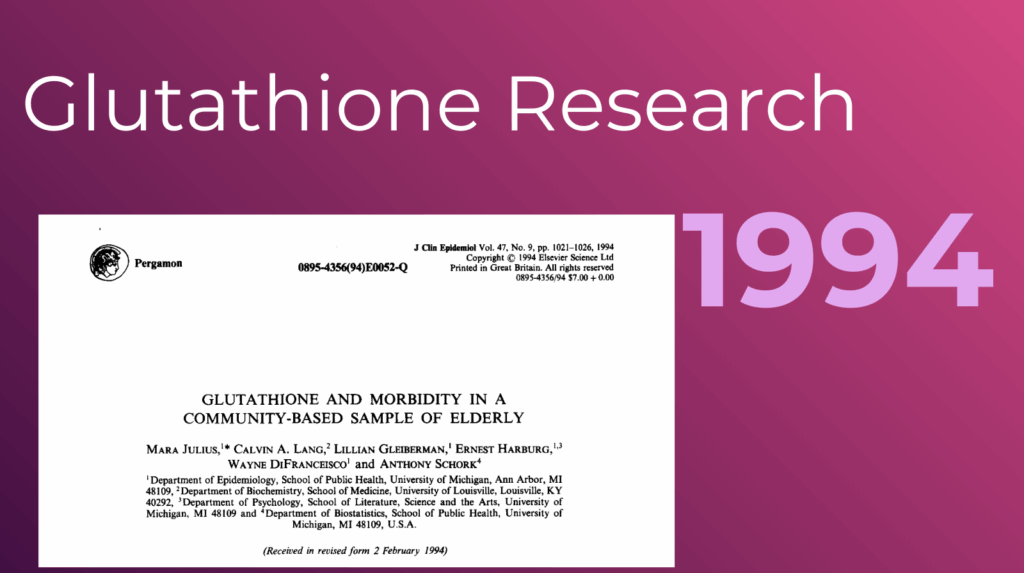
A Review of Research from 1994
A study from 1994 explored the intriguing relationship between blood glutathione levels and overall health in elderly individuals. Glutathione, a powerful antioxidant found in our bodies, plays a crucial role in protecting cells from damage and maintaining various physiological functions. This research, conducted on a sample of 33 community-dwelling seniors, suggests that higher levels of glutathione are associated with better health outcomes.
What Did the Study Find?
The researchers discovered that individuals with higher glutathione levels reported fewer illnesses, had better self-rated health, and exhibited lower cholesterol levels, body mass index (BMI), and blood pressure. Specifically, those diagnosed with conditions like arthritis, diabetes, or heart disease had significantly lower glutathione levels compared to their healthier counterparts. This finding is particularly noteworthy as it marks the first evidence linking glutathione levels to physical health in a community-based elderly population.
The study also highlighted that glutathione, along with age and a measure of suppressed anger, accounted for nearly 39% of the variance in morbidity among the participants. In simpler terms, higher glutathione levels were linked to lower rates of illness, suggesting that maintaining healthy glutathione levels could be a key factor in promoting better health as we age.
Why Is Glutathione Important?
Glutathione serves several vital functions in the body, including detoxifying harmful substances, stabilizing cell membranes, and enhancing immune function. As we age, glutathione levels tend to decline, which may contribute to the increased incidence of age-related diseases. This study reinforces the idea that monitoring and potentially boosting glutathione levels could be beneficial for older adults seeking to improve their health and longevity.
What’s Next?
The findings supported the idea of glutathione’s role as a health risk factor in the elderly and how effectively maintaining or increasing glutathione levels could lead to new strategies for enhancing health and quality of life in older adults.
Their conclusion at that time was that the research opened the door to exciting possibilities in the field of gerontology. They believed that focusing on glutathione as a potential marker of health, would help to better understand the aging process and develop interventions that promote healthier, longer lives for our aging population.
Reference
Glutathione and morbidity in a community-based sample of elderly, 1994, M Julius, C A Lang, L Gleiberman, E Harburg, W DiFranceisco, A Schork. https://pubmed.ncbi.nlm.nih.gov/7730904/